
Beyond the Bin
The secret afterlives of ordinary objects
Before the 20th century, most products were designed to be re-used, and the concept of 'rubbish' barely existed in the way we understand it today. Zero-waste was standard practice – not for the sake of our environment, but because the materials and labour that went into manufactured goods were simply too valuable to be thrown away.
Even after mass-production became commonplace in the Victorian era, jars and bottles were still generally re-used within the home, or else returned to shops or manufacturers to be refilled. Wrapping paper was used for writing notes or lighting fires. Blacksmiths turned scrap metal into new items. Food waste was composted or fed to pigs, dogs, or cats. Cinders from the fireplace could be used to surface a garden path, and coal ash was used in brickmaking or as a soil improver. Old clothes were handed down and altered many times, before being cut up and re-made into quilts or rag rugs. Cloth that was too worn even for this was torn up into rags for cleaning, and eventually passed on to rag and bone men who made a living by collecting anything that could be repaired or repurposed and sold on. (This included actual rags, which would be recycled into new cloth or high-quality paper, and bones, which were carved into ornaments, toys or knife handles, or ground down for fertiliser.) Even cooking grease was often filtered and re-used.
The tiny amount of waste that didn’t find a second or third purpose was usually biodegradable, or at least harmless, and it could be buried, burned, or simply dumped at the end of a garden or on the outskirts of a town. In a largely rural society there was no shortage of out-of-the-way spaces for such small and inoffensive rubbish tips.
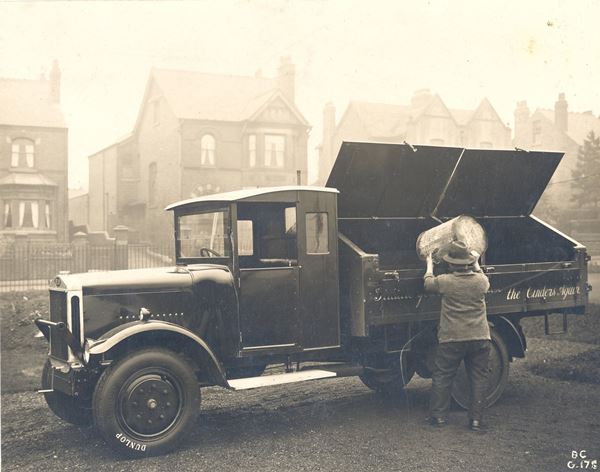
Things began to change in the late 19th century. As the population grew and moved into increasingly crowded towns and cities, disposing of their waste became a problem. The Public Health Act of 1875 made local authorities responsible for disposal of refuse, and by the 1930s most towns in Britain had a weekly bin collection. By the mid-20th century, population growth combined with the social and technological changes wrought by two world wars and the invention of ‘disposable’ plastics had vastly increased the amount of waste we throw away, and that trend has only accelerated over time. Lancaster City Council alone now collects about 50,000 tonnes of waste a year. That’s about the same as the weight of a cruise ship, or 250 blue whales, or about 4,000 double-decker buses.
As the social and environmental impact of all this rubbish started to mount up, campaigners began to urge a return to a culture of re-use and recycling. In our district today, a little over a third of our refuse is recycled – but we could still learn a good deal from the past, when almost nothing went to waste.
Here are just a few examples of re-used, re-purposed or recycled objects from our local history.
Cannons
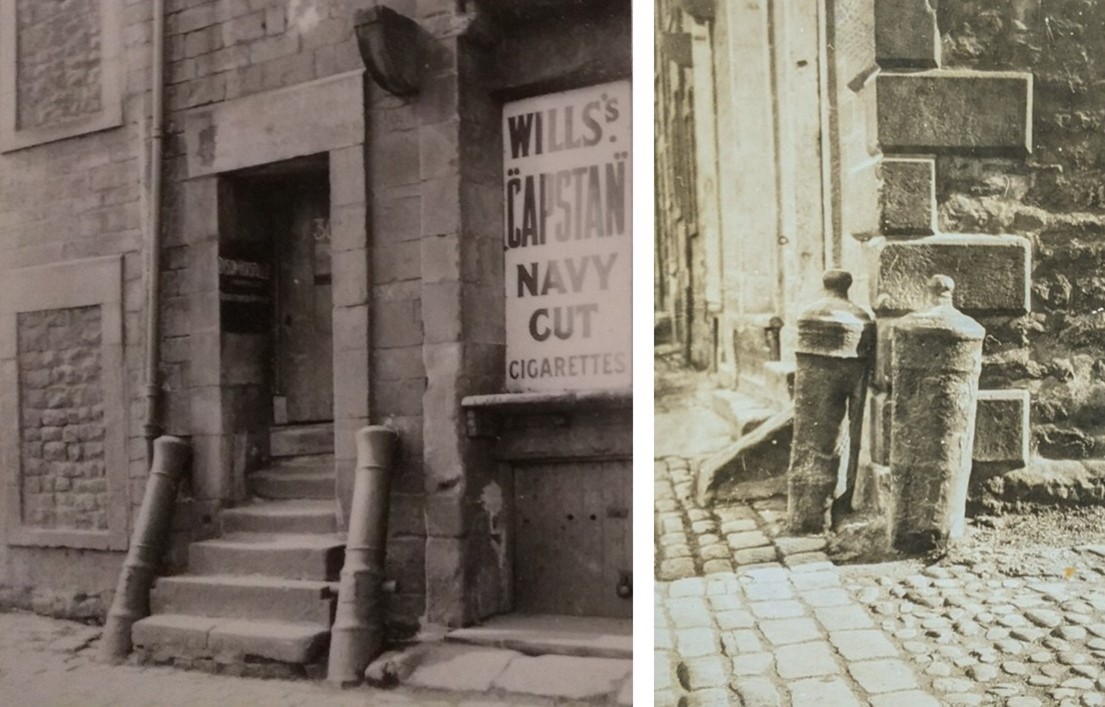
When the Napoleonic wars with France ended in 1815, many of Lancaster’s merchant vessels were quick to remove the heavy cannons they’d been using to defend themselves. Some of these redundant guns found a new home on the quayside, repurposed as bollards protecting steps and the corners of warehouses from road traffic. Many remained until they were taken for scrap during the Second World War - and perhaps reincarnated for a second time in the form of modern weapons or machinery.
Rag Rug
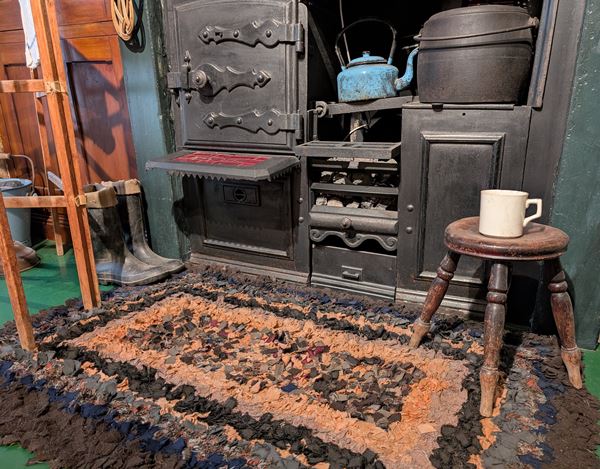
Rag rugs were popular home-made items during the 18th and 19th centuries. Traditionally made using old clothing - woollen coats, trousers or any thick fabric - they were known by many different names: rag rugs, peggy mats, clippy mats or proddy mats.
Old hessian sacking was used for the base, and strips of cut-up material would simply be pushed through the loose weave - sometimes with a filed down clothes peg, hence the name peggy mats. Placed in the parlour, bedroom or scullery, these rugs helped to keep feet warm in an era before fitted carpets. They were particularly popular in mining areas, and here in the North-West of England they were often placed on beds to ward off the cold. They were generally dark in colour, made from the worn-out clothing of the working classes who could rarely afford bright, expensive dyes. Rag-rugging was a communal activity, and family, friends and neighbours would often meet up to create a rug together.
Made exclusively from things that would otherwise be thrown away, rag rugs were seen in Britain as a sign of poverty. As a curious contrast, in 18th century Sweden they were a sign of great wealth, because the material used was all hand woven. Even scraps of fabric were invaluable, so rag rugs were kept as precious decorations and it was unheard of for people to walk on them.
Fish Frail
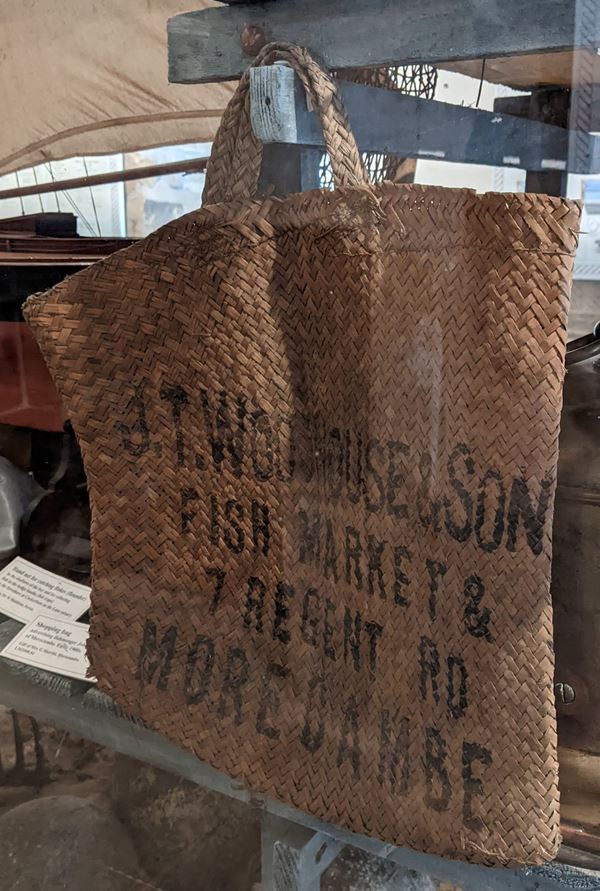
Re-usable, branded shopping bags are nothing new. This one in the fishing display at the Maritime Museum is a type known as a ‘fish frail’. It’s a perfect example of a sustainable, locally-sourced, eco-friendly and biodegradable product - something which can be hard to find today, but which was simply a cheap and practical choice when it was made in the early 1900s.
It's woven from rushes, which grow all around the marshy fringes of Morecambe Bay – easily available for anyone to harvest. These bags were cheap to produce and most fishmongers gave them out to customers for free. This was a great marketing strategy: the lightweight, breathable bags allowed customers to keep their wet fish cool and separate from a basket full of other goods, while the fishmonger's name was advertised around the town. Stencilled on the front of our example are the details of Morecambe Fishmongers John Woodhouse & Son, who had a stall at the fish market as well as a shop in Regent Street.
Despite the name, fish frails were often re-used many times. (The original meaning of ‘frail’ in this context is closer to ‘flexible’.) With strong braided handles and a practical size, they were ideal as general shopping bags and were sometimes even repurposed as tool bags in industrial towns. When they eventually wore out they could just be tossed onto a compost heap, where they would quickly decompose with no harm done to the environment.
Bone Carvings
Turning your table scraps into treasure may be one of the oldest art forms around, and it could also be considered one of the earliest forms of recycling. Bone is a durable yet easily workable material, used throughout human history for everything from arrowheads to musical instruments. Here are three examples of bone objects from our collection.
Viking Comb
Wild, unkempt and fearsome looking Viking warriors with a love of combat and looting may be the traditional textbook image, but combs are one of the most common archaeological finds in a Viking context. Contrary to the stereotype, this shows us that the Vikings paid close attention to personal grooming.
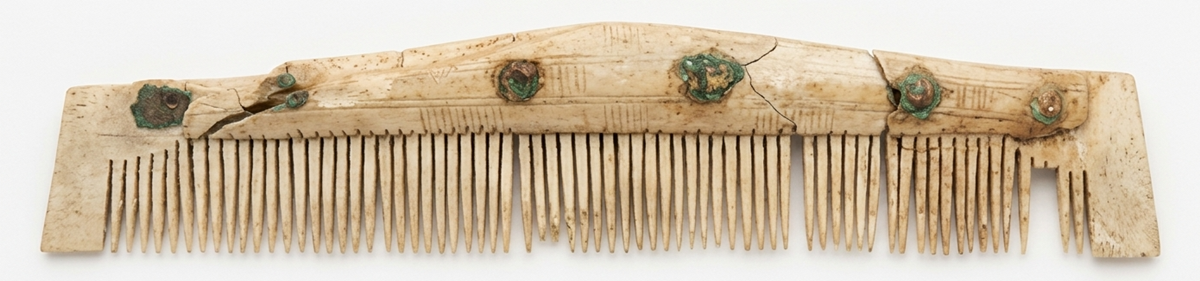
Some bone combs were superbly decorated and even came with their own case to protect the teeth. Ours has intricate carved patterns for decoration. Combs like this were sometimes worn on display, like pieces of jewellery. The time and effort that went into decorating such a simple tool suggests that hairstyles formed a big part of a Viking’s identity, and details from the Norse sagas confirms that hair had great significance as a mark of distinctiveness. Nordic people frequently even took their combs to the grave. But perhaps the most telling evidence comes from the account of 12th century English cleric John of Wallingford, prior of St. Fridswides, who complained bitterly that the Viking Age men of the Danelaw '...caused much trouble to the natives of the land; for they were wont, after the fashion of their country, to comb their hair every day, to bathe every Saturday, to change their garments often, and set off their persons by many frivolous devices. In this matter they laid siege to the virtue of the married woman, and persuaded the daughters even of the noble to be their concubines'.
Viking head carvings, often found on ships, also tell us a lot about the different hair styles that the Vikings clearly spent such time and effort on perfecting – starting with the fact that it was deemed necessary to depict these different styles in detail. Most head carvings portray men with fairly simple hairstyles, either long or cropped short. But they reveal a much wider variety in facial hair, including waxed and ornately curved moustaches, stubble, well-groomed and neatly trimmed beards, forked beards and plaited beards. Much like people today, both men and women in the Viking era clearly took care of their appearance and hoped to distinguish themselves from others.
The comb displayed at Lancaster City Museum was found near St Patrick’s chapel in Heysham during excavations in 1978, in the grave of a woman from the 10th Century. This was a period when the local area was strongly influenced by Vikings who both lived and traded here, so it’s hard to tell whether this woman was born here or came originally from Scandinavia.
Tudor Ring
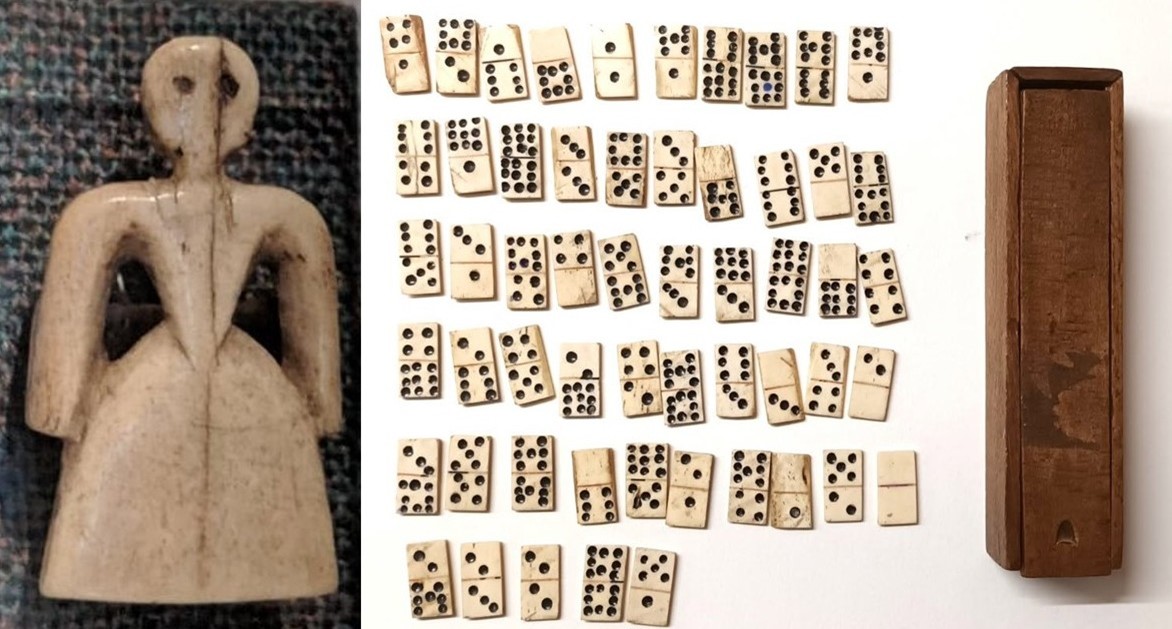
Dating from the 16th century, this bone ring bearing the carved figure of a woman probably began life as a butchery offcut. It was discovered under Market Street in the area once occupied by Lancaster's 'shambles'. Perhaps made by a butcher or his apprentice, it may have been intended as a love token, sold for extra income, or simply made to pass the time – we can only speculate. The ring is a ‘folk’ object – an item from a pre-industrial communal society. Little is known about objects of this nature because they come from less wealthy backgrounds that left fewer written records. Aside from being a beautiful example of what can be made from next to nothing with a little creativity, it is in many ways symbolic of numerous objects owned by less affluent communities which have been forgotten over time.
Dominoes
The slightly rough and ready appearance and the variation in sizes and shapes of these dominoes comes from the fact that they were made from pieces of bone scavenged from the grounds of Lancaster Castle. A message written on the box states that they were made by prisoners held there – which is not unusual. The castle operated as a prison for over 800 years, and several grades of prisoners were allowed to make and sell items for much of this time. In some periods there were even weekly markets where the prisoners could sell things that they made to the people of the town. Money made from these sales could be used to purchase extra food, pay debts or improve their conditions within the prison. We believe these dominoes may have been made by Napoleonic prisoners of war as they have some similarities to another POW-made games set in our collection, as well as to other sets of dominoes from this era.
You may notice that these dominoes go up to double nine rather than double six. This is a common variation in Lancashire and a few other places around the world, which helps to confirm the local origins of the set.
Codd-necked Bottles
Developed in London in 1872, these carbonated drinks bottles use a glass marble as a stopper. The gas pressure inside pushes the marble up against a rubber washer to seal the bottle. To open it, you push the marble down into a specially shaped chamber in the neck of the bottle. This system was widely used until it was replaced by the crown bottle caps we use today.
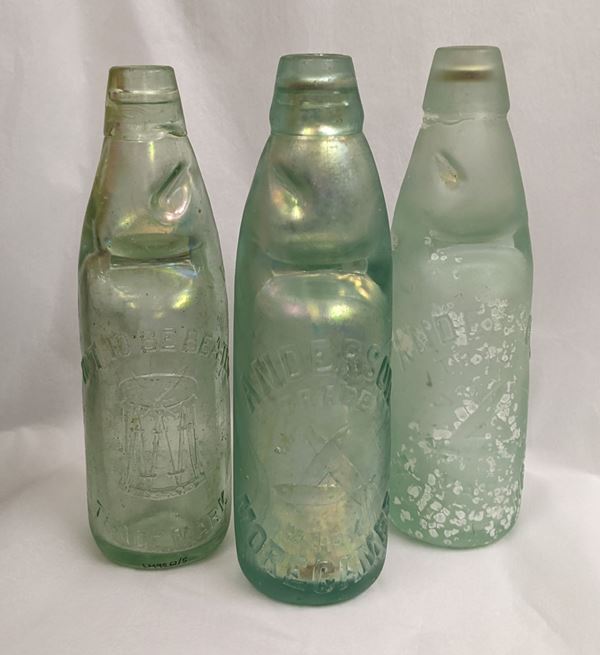
The bottles pictured here were sold in Morecambe in the late 19th or early 20th century, when the town’s popularity as a seaside resort was at its height and its motto of 'beauty surrounds, health abounds' was taken seriously. A trip to the seaside was thought to be good for one's health, and many local companies were quick to jump on the band wagon, selling products such as mineral water to visitors on the basis of supposed health benefits.
Codd-neck bottles like these were explicitly designed to be returned and re-used dozens of times. Because they were heavy, complex to manufacture, and required a licensing fee to Hiram Codd’s patent company, a single Codd bottle cost a bottler around 3 pence to buy – at a time when the soft drink inside sold for just a penny. If customers threw them away, drinks companies would have quickly gone bankrupt.
Drinks manufacturers therefore relied on grocers, publicans, and street vendors to collect a deposit (often a penny) per bottle. Customers only received their deposit back upon returning the bottle intact. The value of these bottles also meant that drinks manufacturers fiercely protected their bottle stock; in 1887 it became a criminal offense for a rival bottler to refill another company’s embossed Codd bottle, or for a shopkeeper to sell drinks in a bottle bearing someone else's name. But since consumers often returned bottles to whichever shop was closest rather than the original seller, a system to get the bottles back to their original owners was required. Regional Bottle Exchanges were developed, acting as clearing houses. Inspectors collected stray Codd bottles from shops, sorted them by the manufacturer's embossed logo, and resold them back to the original owner for a small handling fee.
However, this complex system had one fatal flaw - or benefit, depending on your point of view… The marbles used as stoppers inside Codd-necked bottles were coveted by children everywhere, and they could only be removed by smashing the bottle. Millions of these liberated marbles (known as "alleys" or "catties") spent decades circulating in schoolyards, pockets, toy boxes, and under floorboards before being lost or passed down through generations. Many a prized marble collection still owes its existence to Hiram Codd’s invention, but of the tens of millions of Codd bottles (perhaps more than 100 million) that were produced, less than 1% are thought to have survived intact into the present day.
.jpg)
Shrimp Pots
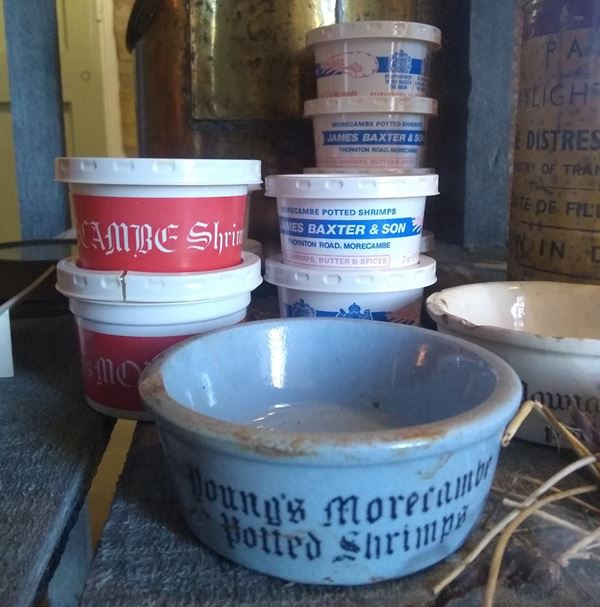
Before the invention of plastic, the famous Morecambe Bay Potted Shrimps were sold in cheap, mass-produced earthenware dishes. Unlike the more expensive Codd-necked bottles, manufacturers did not expect these dishes to be returned. Yet the shallow, sturdy pots were rarely thrown away, because they proved to be exceptionally practical around the house. Victorian households routinely scrubbed them out for domestic re-use as butter dishes, spice pots, pin holders, or workshop containers for nails or grease.
The same was true of the containers used for many household products, and even today it’s not unusual to find an antique stoneware marmalade jar used as a pen pot, or a decorative biscuit tin containing keepsakes.
Snuff Boxes
Items made from reclaimed materials taken from famous buildings or ships have long been popular as souvenirs. These two wooden snuff boxes are carved from oak beams removed from Lancaster Castle during renovations, and both contain handwritten notes to advertise their origins.
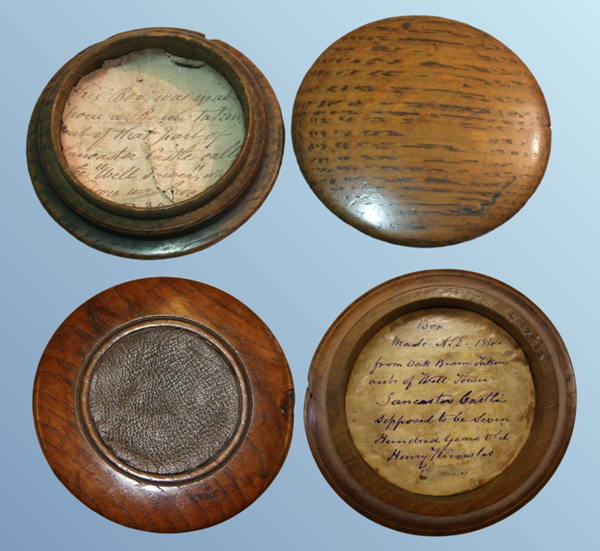
The first dates from 1806, and the message inside reads: This Box was made from a Beam taken out of that part of Lancaster Castle called the “Well Tower”, which Tower was erected AD 305.
The second is a little more recent: Box made A.D. 1844 from Oak Beam Taken out of Well Tower, Lancaster Castle, Supposed to be Seven Hundred years old. Henry Knowles [Last word obscured].
Neither inscription is entirely accurate, however. The Well Tower was built around 1325, not 1144 as the second note suggests, and certainly nowhere close to 305 AD. These dates may have been the best estimates available to the makers of these boxes, or they may have deliberately exaggerated the antiquity of the tower to increase the value of their products.
The taking of snuff (inhaling ground tobacco through the nose) is thought to have first been practised in Brazil. Spanish explorers introduced it to Europe soon after they reached the Americas in the late 15th century. From Spain its use gradually spread across the continent and around the world. It became more widely available in the 17th and 18th centuries as European powers began to exploit enslaved workers to cultivate tobacco on a large scale in the Caribbean and the Americas.
Snuff was seen as a fashionable luxury for several centuries, and snuff boxes became an essential men's accessory. Most were made of wood, but for those with money they could also be made of gold, silver, tortoiseshell, or mother of pearl. Boxes encrusted with diamonds were a popular statement of extreme wealth.
Buildings & Ships
Reclaimed building materials weren't only used for carving into snuff boxes and souvenirs. For most of our history they were routinely reincorporated into newer buildings. It's probable that there are buildings in Lancaster today which still contain stones that were first used as far back as the Roman era. After the empire withdrew from Britain many stone buildings fell into disrepair and were dismantled, only for their well-dressed masonry to be re-used in humbler structures.
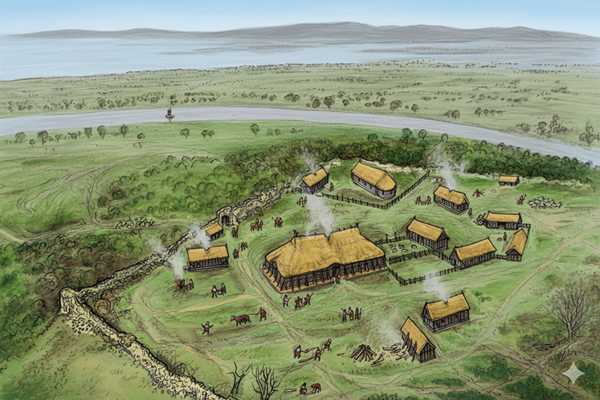
The outer wall of the Roman fort on Lancaster's Castle Hill lasted a while longer before meeting the same fate. It remained largely intact for several hundred years, repurposed by local Britons and later Anglo-Saxon settlers who created fortified settlements within its protective boundary.
Ships that were no longer seaworthy were another source of materials, and Lancaster's history as a port made these an abundant resource. Some of the roof beams in our 18th century Cottage Museum bear marks and holes suggesting they may once have been part of a ship.
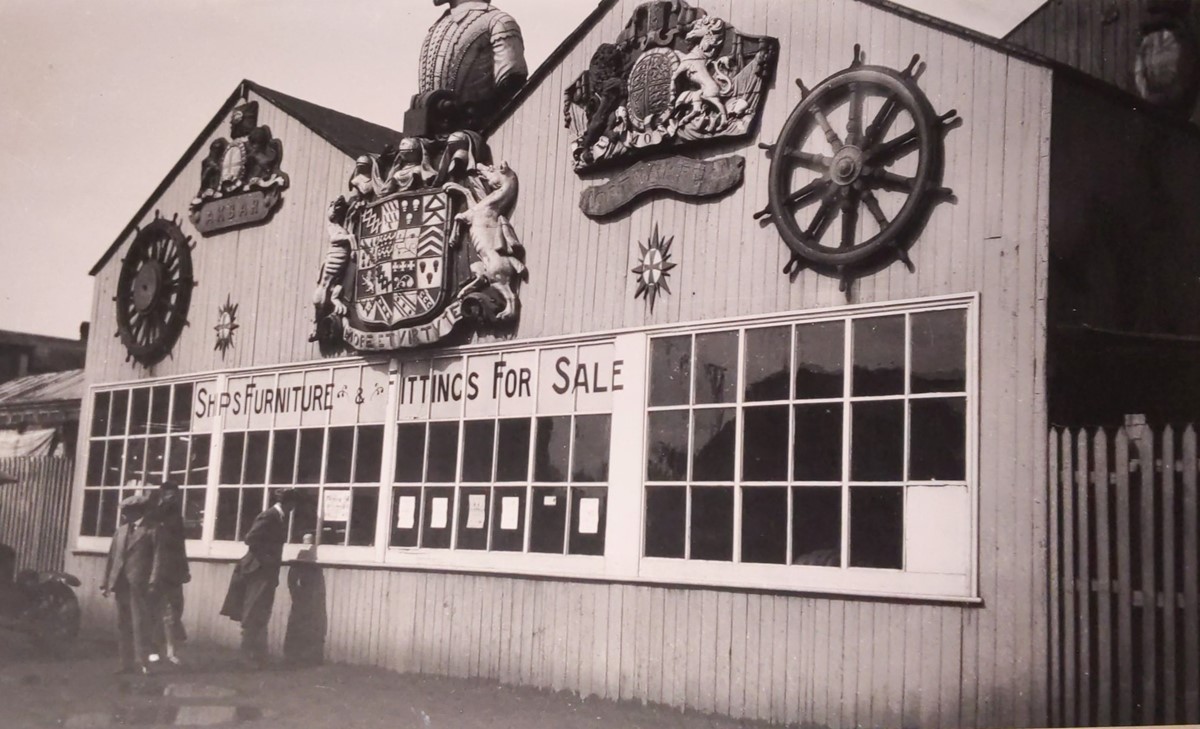
For the first few decades of the 20th century, Morecambe Harbour was home to TW Ward's shipbreaking company. This was both a big industry and a visitor attraction, and the business took advantage of the crowds of tourists by making the furniture and fittings from the ships available for sale to the public. Their primary business however was recycling the valuable steel and other materials that made up the fabric of the ships themselves.
Trench Art
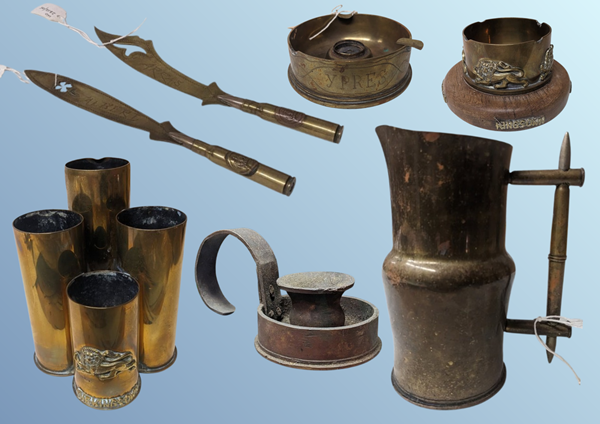
War is in many ways a wasteful business, but the rule that one person’s trash is another’s treasure still holds true. ‘Trench Art’ refers to a wide variety of objects, usually decorative and sometimes also functional, that were made during or soon after the First World War - although it can also describe similar objects from other wars. Often these pieces are made from re-purposed lead bullets, brass recovered from spent charge cases, and copper from shell driving bands, but the term also covers carved wood and bone pieces and even embroidery. Some of the most common creations are ashtrays, matchbox holders, letter knives, model tanks and planes. It is important to note that despite the name, few examples were actually fashioned in the trenches, and not all were made by soldiers.
Pictured here are a few examples of trench art from the collection of the King’s Own Royal Regiment Museum, including letter openers, ashtrays, a pen holder, candle holder and jug, all fashioned from shell casings, bullets, scraps of metal and wood. Some are decorated with regimental cap badges.
Clay Pipes: an exception?
Long before single-use plastics and ‘disposable’ vapes, our ancestors had their own version of the cheap, throwaway habit: the clay tobacco pipe. These were used in Britain from the mid-1500s (when tobacco was first imported from the Americas) right up to the 20th century, when they were largely replaced by cigarettes. Basic clay pipes were sold for next to nothing by tobacconists and could even be bought pre-filled and ready to smoke in taverns.
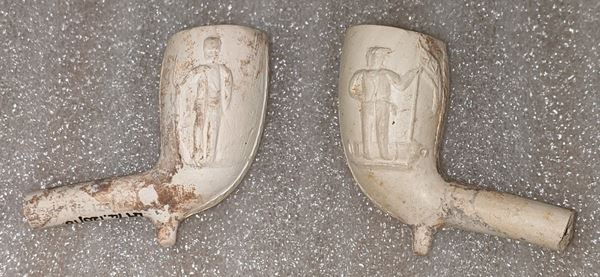
Pictured here are the two sides of the same clay pipe bowl from our collection. It’s a design that was mass-produced in the 18th century by the Army & Navy tobacco company, and the pictures of a soldier on one side and a sailor on the other advertised the brand. The unglazed clay is brittle and this pipe’s lost its stem – either by accident, or intentionally snapped off in stages as the end got clogged with tar.
Clay pipes are a vanishingly rare example of a product from the past that was nearly always thrown away after only a few uses. The big difference, of course, is that while ‘disposable’ plastics will litter the earth for thousands of years and cause no end of problems, these pipes are made entirely of natural clay. They can last a long time but they don’t do any harm to the environment, and they eventually crumble right back down into the soil. There’s a lesson to be learned from this: as we become more aware of the problems caused by our modern throwaway culture, some of us are beginning to switch back to natural materials for those disposable products that we’re not willing to do without. Paper bags, wooden takeaway cutlery, and cardboard, cellulose, or corn-starch packaging can all be just as convenient as single-use plastics.
There’s a twist to the tale of clay pipes, however. Their very nature as common and disposable items has given them an unexpected second life in the modern day… as the archaeologist’s best friend. Designs changed over time and they were thrown away in huge numbers, so they can often be used to date the sites where they’re found, or even pinpoint the locations of temporary encampments and battlefields.
Looking back at all these transformed objects, it’s clear that creativity and conservation often go hand in hand. Perhaps the most modern thing we can do today is to look to the past, and rediscover the habit of seeing potential where others see only an end.
The images used in this article are in the copyright of Lancaster City Museums unless stated otherwise.


